



Dr. Sayyid Jalal Hosseini Badakhchani passed away peacefully in London on the morning of 11 August 2026, aged 85. He was a pioneering and distinguished scholar of Ismaili history and thought, with a focus on the Nizari Ismaili literature of the Alamut period. Dr. Badakhchani hailed from a family of scholars who served the Ismaili Imamat for generations; he himself was academically trained by leading Twelver Shi‘i philosopher Jalal al-Din Ashtiani. Dr. Badakhchani was also charged by Mawlana Shah Karim with establishing the Institute of Ismaili Studies Library.
As a young adult and student of Ismaili history, I used to look forward with great anticipation to Dr. Badakhchani’s scholarly publications, sometimes counting down the days to their release dates. While he has published extensively in English and Persian, Dr. Badakhchani’s editions and translations made Nasir al-Din Tusi’s (d. 1274) Nizari Ismaili writings accessible to other academics, the Ismaili Jamat, and the general public.
I know from personal experience that Dr. Badakhchani was always willing to give of his time to help Ismaili students and researchers. He taught at the IIS for many years and he used to promptly respond to emails from interested students and readers of his work. In my own correspondence with him, going back many years, Dr. Badakhchani went out of his way to assist me in my research.
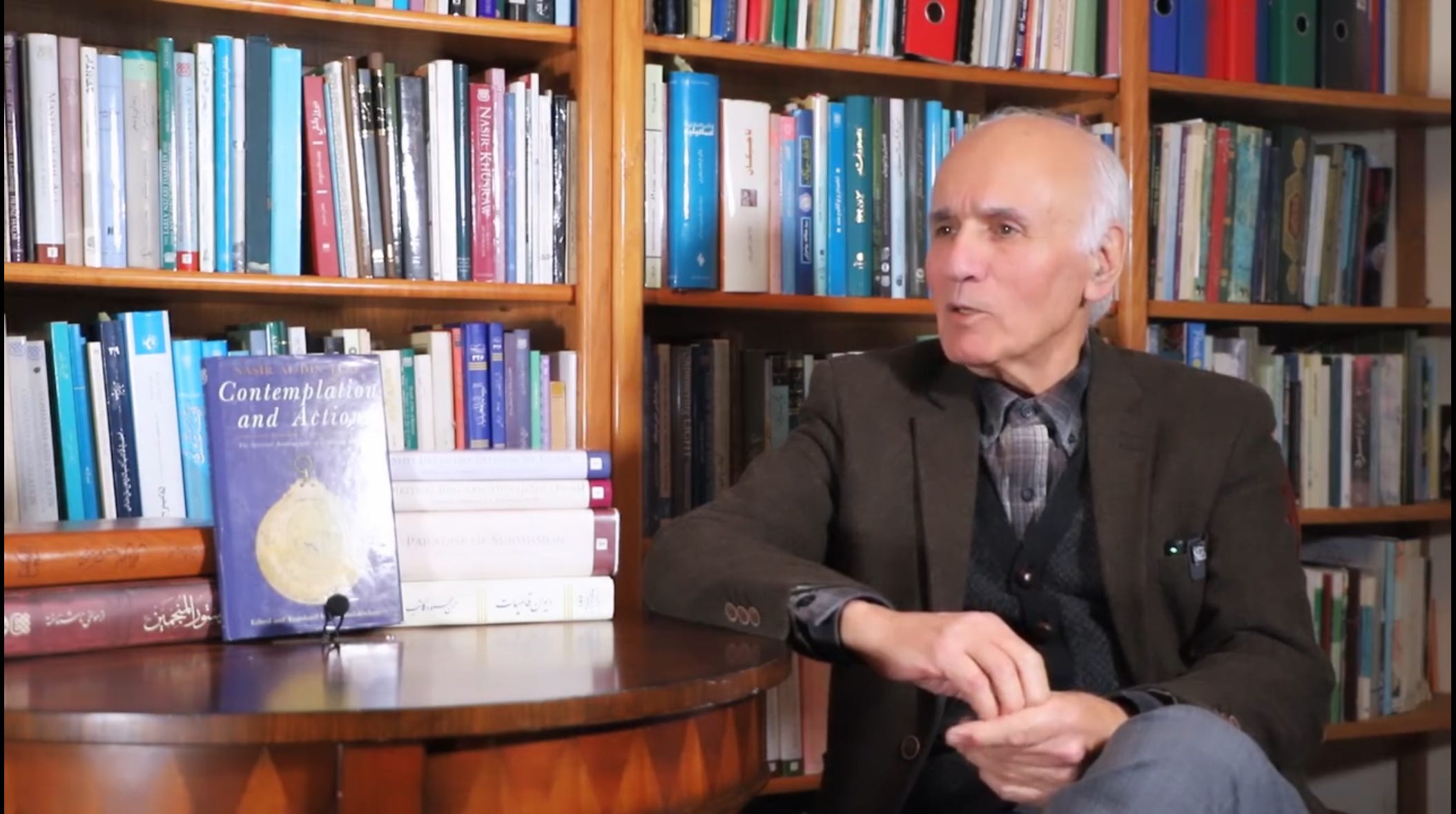
In a tribute published by the Institute of Ismaili Studies, Dr. Daryoush Mohammad Poor writes of Dr. Badakhchani:
“Nearly every scholar now working on Nizari Ismaili literature owes something to Dr Badakhchani’s patient labour of critical editing – manuscripts he tracked down, transcribed and prepared for a readership that did not yet know it needed them. His memory will remain with the IIS for many years to come, and the fruits of that labour will go on serving scholars and students of Ismaili studies long after him. He will be greatly missed.”
Accordingly, I would like to highlight the major publications of Dr. Badakhchani, in which he edited and translated important Ismaili texts. Without his efforts, the Jamat and public would have no access these Ismaili primary texts.
Contemplation and Action by Nasir al-Din Tusi (1998): The Spiritual Autobiography of a Muslim Scholar
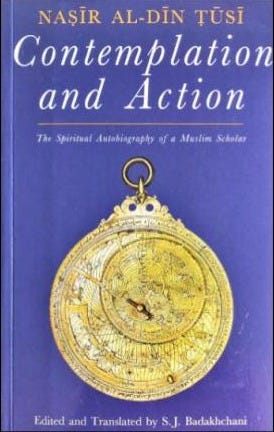
This is Nasir al-Din Tusi’s spiritual autobiography called Sayr wa-Sulk in which Tusi lays out his reasons for embracing the Shi‘i Ismaili Muslim faith and accepting the Nizari Imam as the Truthful Teacher (muhiqq). This text is an excellent entry point into Nizari Ismaili thought in general and Tusi’s Ismaili teachings in particular. A key part of the text is Tusi’s argument on the epistemic necessity of the Imam to recognize the Truth (haqq) and the onto-cosmological status of the Imam as the locus of manifestation (mazhar) of God’s creative act of Command (amr).
The Paradise of Submission by Nasir al-Din Tusi (2005): A New Persian Edition and English Translation of Naṣir al-Dīn Ṭūsī's Rawḍa-yi taslīm
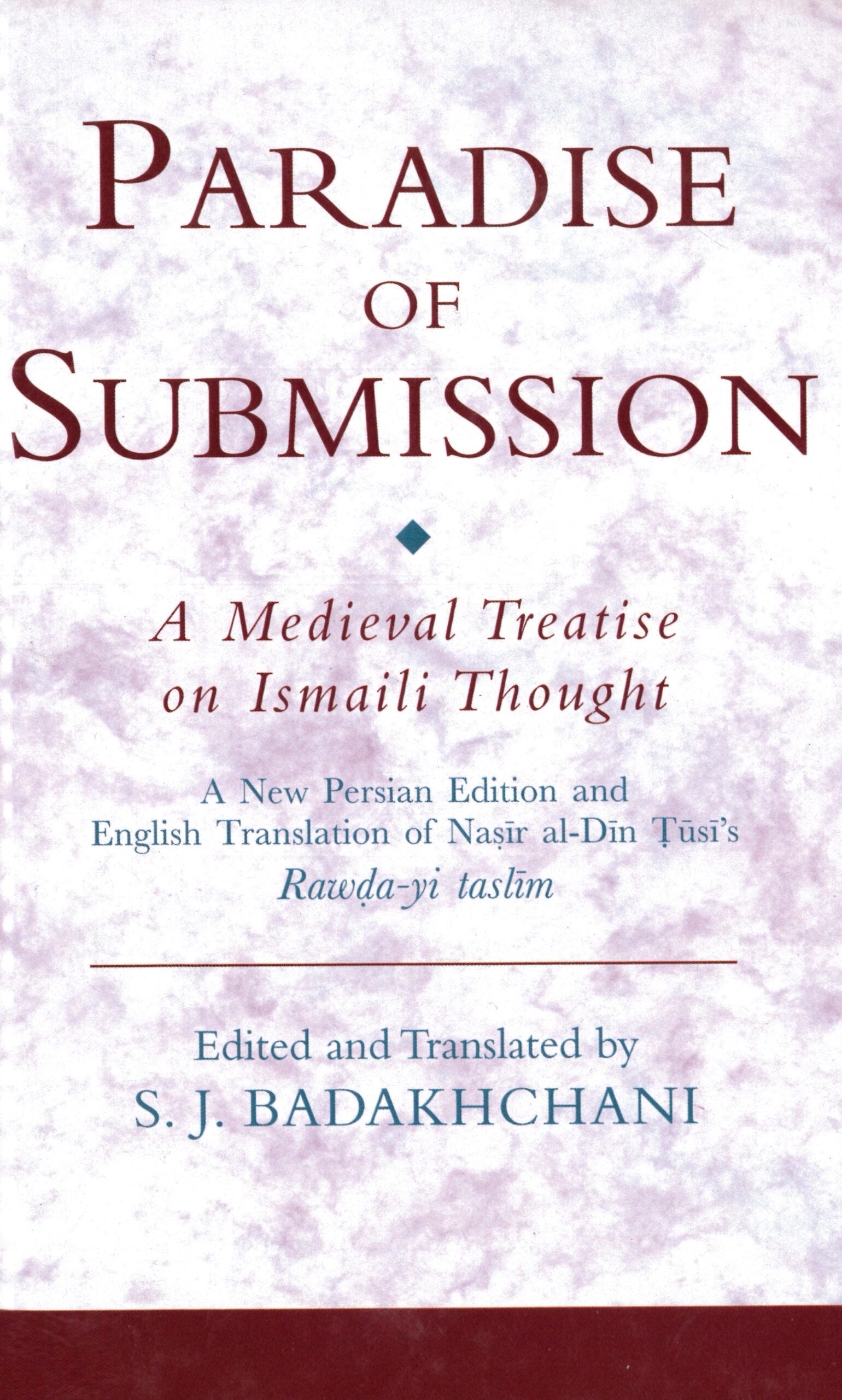
This is the most important treatise on Nizari Ismaili philosophical theology from the Alamut period and it was compiled by a team of Nasir al-Din Tusi’s students based on Tusi’s lectures given at Alamut. The treatise begins with metaphysics, theology, and cosmology and proceeds through epistemology and soteriology before discussing Prophethood and Imamology. The metaphysics and cosmology section is important because this text reaffirms and continues the Neoplatonic metaphysics of the Fatimid Ismaili tradition and also the cyclical schema of religious history. Tusi’s revelatory exegesis (ta’wil) of the story of Adam and Iblis is perhaps the most accessible account of this motif in Ismaili works. The Imamology section is extremely important as it contains excerpts from the farmans of the Nizari Imams of Alamut, whose teachings clarify the ontological status of the Imam and the Imamat and related matters such as the succession of Imams. Most notably, this treatise teaches that the office of Imamat is ontologically superior to the office of Prophethood and that the lineage of Imams extends far back in history before Prophet Muhammad and even before the Prophet Adam.
Shi‘i Interpretations of Islam (2010): Three Treatises on Theology and Eschatology: A Persian edition and English translation of Tawallā wa tabarrā, Maṭlūb al-muʾminīn and Āghāz wa anjām of Naṣīr al-Dīn Ṭūsī
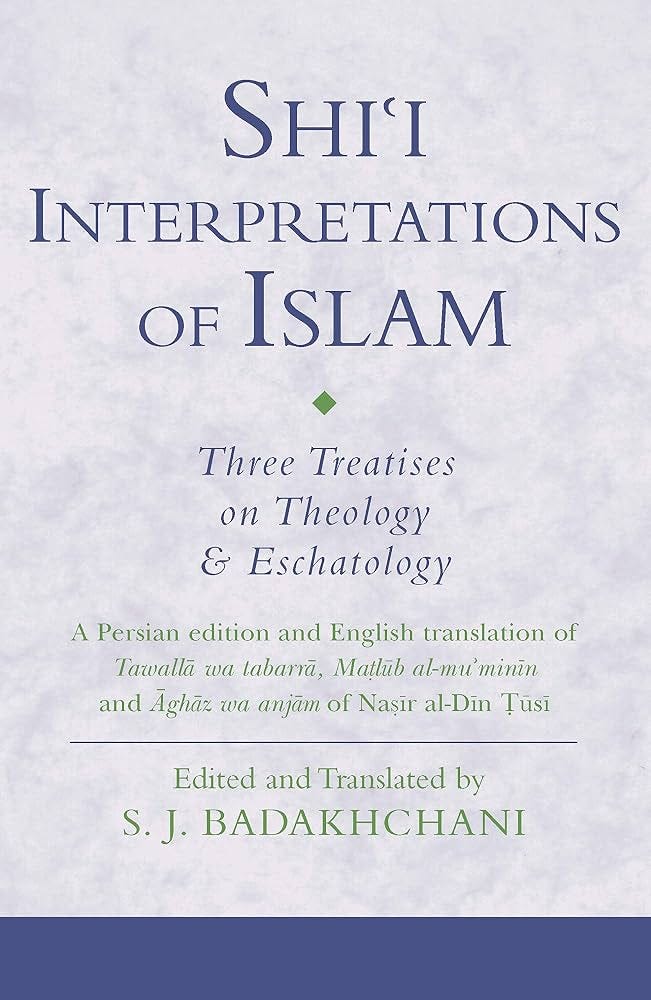
This is a collection of three Ismaili treatises by Nasir al-Din Tusi. The first treatise, Tawalla wa tabarra is Tusi’s mystical and philosophical explanation of the concept of “solidarity” with the Imams and their followers and “disassociation” from the adversaries of the Imams. By interpreting both terms at various levels of the human soul and intellect, Tusi arrives as deeper and practical manifestations of these principles for Ismaili spiritual life. The second treatise Matlub al-mu’minin is a practical explanation of Nizari Ismaili practice in the 13th century in terms of the shari‘a rituals, their esoteric meaning, and the principles of qiyamat or haqiqat that transcend the shar‘a. The third treatise Aghaz wa anjam is on eschatology and the afterlife from an Ismaili-Sufi perspective.
Dīwān-i Qāʾimiyyāt (Poems of the Resurrection) of Ḥasan-i Maḥmūd-i Kātib (2011):
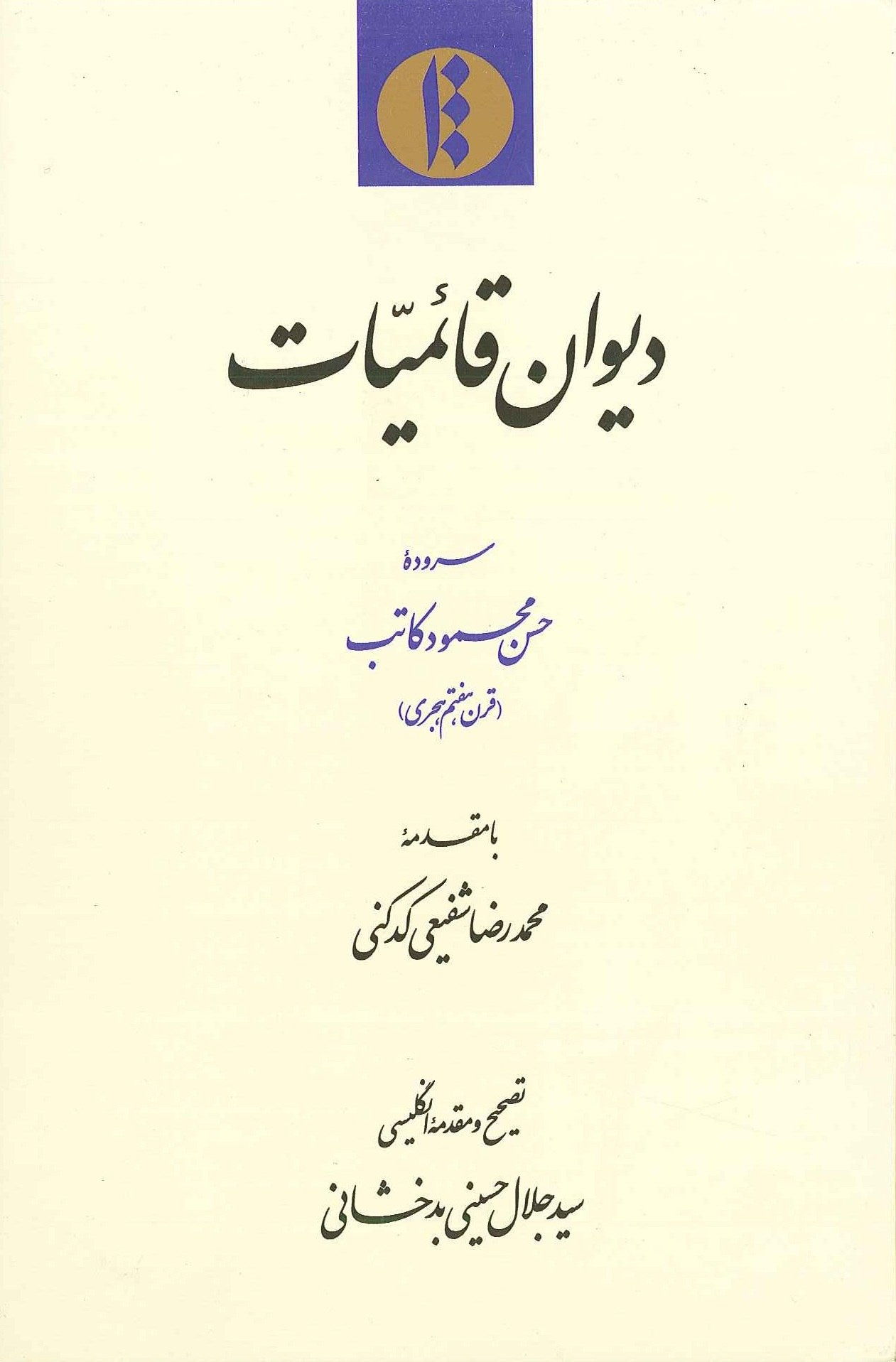
Ḥasan Maḥmūd Kātib (d. after 640/1243) was an Ismaili poet. Born near Qazvīn, he was alive when Imam Ḥasan of Alamūt (d. 561/1166) proclaimed his doctrine of qiyāmat or spiritual ‘resurrection’ in 559/1164. He was a secretary of the governor of the fortress of Gird Kūh, Shihāb al-Dīn, whom he later followed to Quhistān. Around 630/1232 he was in Alamūt, preparing a copy of the diwan whose surviving fragments are published here, to be offered to the Imam of the Ismailis at the time, ʿAlāʾ al-Dīn Muḥammad (d. 653/1255). Ḥasan Maḥmūd was well-versed in the intellectual and spiritual universe of Nizārī Ismailism as recorded, inter alia, in Naṣīr al-Dīn Ṭūsī’s (d. 672/1274) Rawḍa-yi taslīm Sayr wa sulūk, and Āghāz wa anjām. The present diwan, edited by Dr. Badakhchani, contains the most complete contemporary catalogue of the terminology used in expressing Nizārī Ismaili doctrine, surpassing even the works of Ṭūsī, Nāṣir Khusraw (d. after 462/1070) and Nizārī Quhistānī (d. 720/1320). [Text from Institute of Ismaili Studies]
Spiritual Resurrection in Shiʿi Islam (2017): An Early Ismaili Treatise on the Doctrine of Qiyāmat: A new Persian edition and English translation of the Haft bāb by Ḥasan-i Maḥmūd-i Kātib
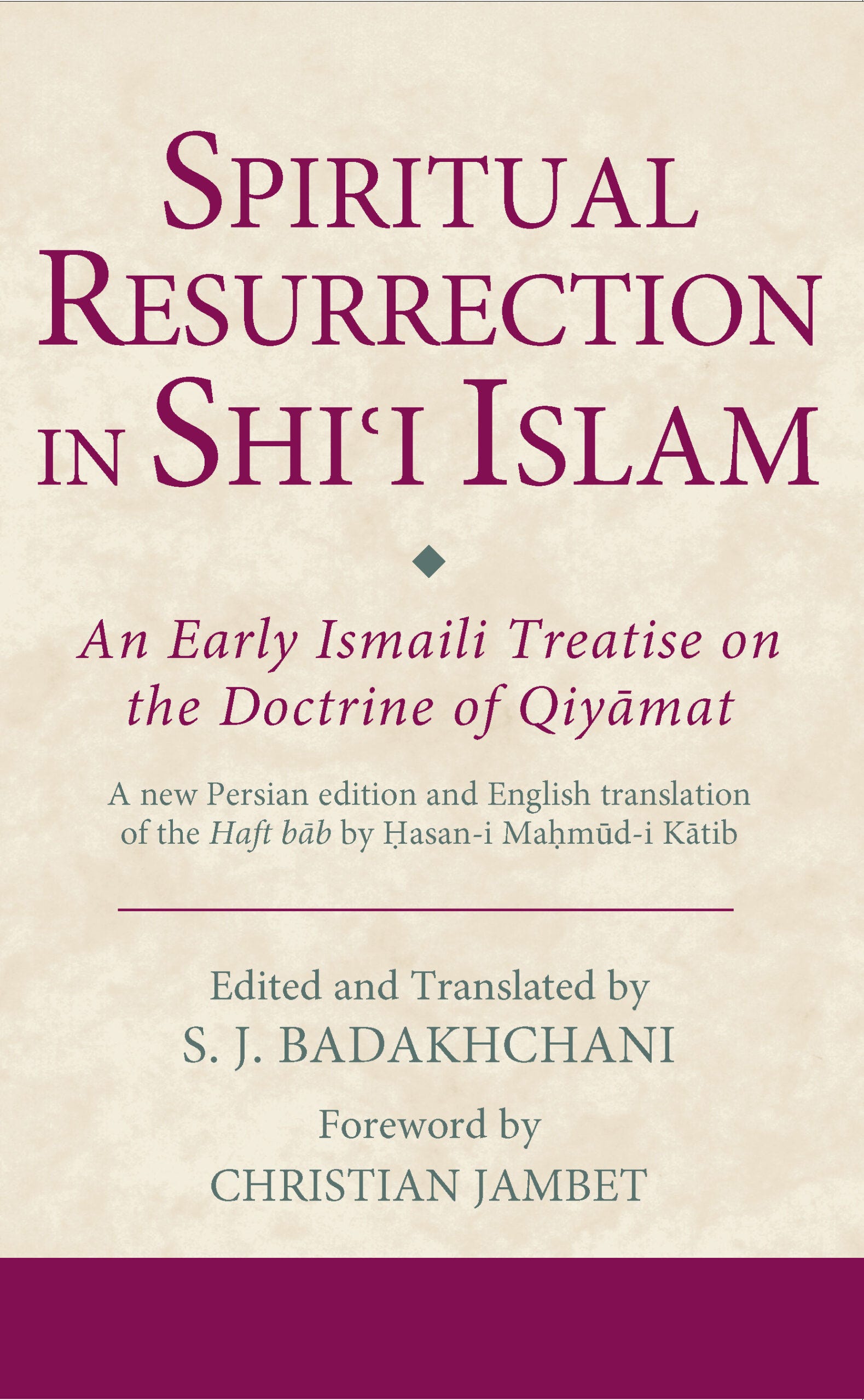
Of the few surviving Nizari Ismaili texts from the Alamūt period, the Haft bāb (Seven Chapters), which outlines the basic tenets of Ismaili philosophical theology, has proved to be the most popular. One of its many attractive features is its simple recounting of the most complicated Ismaili theological narratives, including the doctrine of the Resurrection (qiyāmat). Produced around the year 1203, this small treatise was probably intended as an introduction to the Diwān-i Qāʾimiyyāt compiled by Ḥasan-i Maḥmūd-i Kātib (d. after 1242).
The current text of the Haft bāb, edited and translated into English by S. J. Badakhchani, is based on Badakhchani’s analysis of a great number of manuscripts available, including a complete and unaltered version. The concepts found in the text derive largely from the intellectual heritage of the Fatimids. These include the idea of tanzīh (the absolute transcendence of God beyond human understanding and knowledge); a cyclical conception of prophetic history, consisting of seven eras (dawr); the Ismaili Imamate as the most important pillar of Ismaili Islam; and the Qiyāmat as the completion and perfection of the religious law (shariʿāt). [Text from Institute of Ismaili Studies]
Ya ‘Ali Madad,
Khalil Andani,
Co-Founder and Director, Ismaili Gnosis
Associate Professor of Religion, Augustana College
August 13, 2026
Follow on Instagram:
ismailignosis | ismailignosis.blog
Access Full Content
on Ismaili Gnosis
Know someone who would enjoy
full access to Ismaili Gnosis?
Support Our Mission
“Whether you are giving to an Imamat institution or to any other organization which works for good, these are the same in my eyes. All giving is an act of faith. All giving is of spiritual benefit.”
— Imam Shah Rahim al-Husayni⁽ᶜ⁾
(Dallas, Texas, November 10, 2025)

Ismaili Gnosis is a U.S.-registered 501(c)(3) nonprofit. Your voluntary donation supports research and educational content and is separate from paid Ismaili Gnosis subscriptions offered through Substack.

إنا لله وإنا إليه راجعون