


Excerpts from Naṣīr al-Dīn Ṭūsī’s Rawda-yi Taslīm, translated by S.J. Badakhchani as Paradise of Submission: A Medieval Treatise on Ismaili Thought (London and New York, 2005), 126–133 (translation slightly modified). Section headings have been added for clarity.
Knowledge of the Imam: Four Categories of Recognition (Ma‘rifat)
Knowledge (ma‘rifat) of the Imam, from the point of view of his real being as Imam, is impossible for mankind; but in terms of [his] relation with mankind, knowledge of him has been arranged into four categories so that no one may be deprived of recognising him according to the degree he has in the scale of being.
The first is the knowledge of the person of the Imam in his physical (jismani) form. Animals share this [kind of] recognition [with humans], as do [his] enemies. If this recognition did not exist, when [his followers] want to prostrate before him, how can they know before whom they should prostrate and towards whom they should place their faces on the ground?
The second is the knowledge of his common name (ism-i ‘amm) and physical genealogy. This recognition is shared alike by the followers of truth (muhiqqan) and the followers of falsehood (mubtilan), by hypocrites and faithful believers. If this kind of knowledge did not exist, when they want to perform their prayers, they would not know who is to be named in their prayers (du‘a) and to whom they should address their prayers for forgiveness and repentance.
The third is the knowledge of his Imamate and faith in and submission (taslim) to him. In this [kind of] recognition there is a radical distinction made between the follower of truth and the follower of falsehood. The good become distinguished from the bad through dissociation (tabarra) [from them] and by expressing their love (tawalla) [for the Imam] are admitted into his congregation.1
The fourth is the knowledge of his essence (dhat) through [recognition of] the reality of his attributes. This [type of] knowledge is obtained by one’s affirmation of the divine transcendence (tanzih) and holiness (taqdis) and is utterly unlike all other forms of knowledge [so far mentioned]. [Here], even the holy souls and enlightened minds lack the power to gaze directly upon the sun of this knowledge, [such that] “Minds are perplexed without reaching him, eyesight is blinded, speculation is nullified, knowledge is defeated, holy souls have perished and illuminated minds are brought to nought.”2 (Paradise of Submission, 126–127).
Index of Truth: The Truth Follows the Imam
[…] In all periods and at all times the welfare of mankind depends on what he orders. (Paradise of Submission, 128).
[…] The following is one of the sayings [of the Imams]: “Our affair is one of intense hardship, our secret a dreadful mystery. No one can bear it except an angel close [to God], a Prophet sent as a messenger, or a believer whose heart God has tested with faith.”3 And the following is [another] saying — upon his mention be peace (li-dhikrihi as-salam): “You will be sifted like grain in a sieve, boiled like water in a pot, mixed up, until you are turned completely upside-down.”4 … This means you will be subjected to afflictions and perplexities of trials and tribulations; you will be turned upside-down, so that your essence (khulasa) will [be purified and] remain on top, leaving whatever is left on the bottom. (Paradise of Submission, 128).
[…] Anyone who reasons to himself that the Imam — upon his mention be peace — should act according to the prescriptions of the founder of the religious law in order to be Imam and in order to be impeccable (ma‘sum), that he should adhere to the canons of ascetic piety and holy chastity which ordinary people consider to be piety and chastity, [such a person] can be numbered among those who are described, when discussions about human intelligence are broached, as [possessing] ‘such denial, such devilry, which resembles reason, but is not reason!’5 Such a person does not have even an iota of understanding regarding the condition of the Imamate.
When such people witness the behaviour and actions of the Imam — upon his mention be peace — they become delirious, thinking these to be terrible transgressions, uttering things ‘whereby the heavens are almost torn asunder’ (Qur’an 19:90). For the Imam — upon his mention be peace — exercises his judgement in a manner that is beyond the comprehension of mankind. Therefore, only that person of whom it can be said that ‘The believer has been created from [the Light of] God, and when God orders him something, he will recognise it’6 will be able to disclose this mystery by the light of his primordial conscience (nur-i fitrat). Such a person knows, beyond any shadow of doubt or suspicion, that it is the truth which follows the Imam, not the Imam who has to follow the truth. This is because the Imam is the lord of truth (khudawand-i haqq), and his will and desire have no need to be justified or motivated by any secondary cause; from his perspective, the cause, the caused and the causation are all the same.
Similarly, such a person will understand that [the Imam] is truthful in essence (muhiqq-i bi-dhat), such that all those who become adepts in truth have been vouchsafed their truthfulness through his influence and grace. All that the worldly folk deem to be truth, when he declares it false, they also apprehend it to be false; and all that the world regards as false, when he declares it to be truth, they consider it to be true. Thus, it is the Imam who is the index of truth (nishan-i haqq) in every situation and time, not his [transient] words and deeds. They consider truth without him as infidelity (kufr), and to set it [i.e., truth] besides him as polytheism (shirk). By this means, such a person can attain to the supreme height [of understanding] which is the abode of the most advanced adepts (sabiqan). However, as for the one of whom it is said that ‘the infidel (al-kafir) is created from the sins committed by the believer,’ he will fall into everlasting nothingness and eternal humiliation due to his own obstinacy, denial and opposition to the Imam. We seek refuge from this in God. (Paradise of Submission, 129–130).
Call the Imam: He Is All Things
Now, you may call the Imam — upon his mention be peace — either ‘Imam’, or the ‘eternal Face of God’ (wajh Allah al-baqi), or the ‘Supreme Attribute’ (sifat-i a‘zam), or the ‘Great Name of God’ (nam-i buzurg-i khuday), or the ‘Manifestation of the Supreme Word’ (mazhar-i kalima-yi a‘la), or the ‘Truthful Master of the Age’ (muhiqq-i waqt). For he is all things even without creation, whereas all creation devoid of him is but nothing. All these titles have one and the same meaning. (Paradise of Submission, 133).
Support Ismaili Gnosis
in Publishing Articles
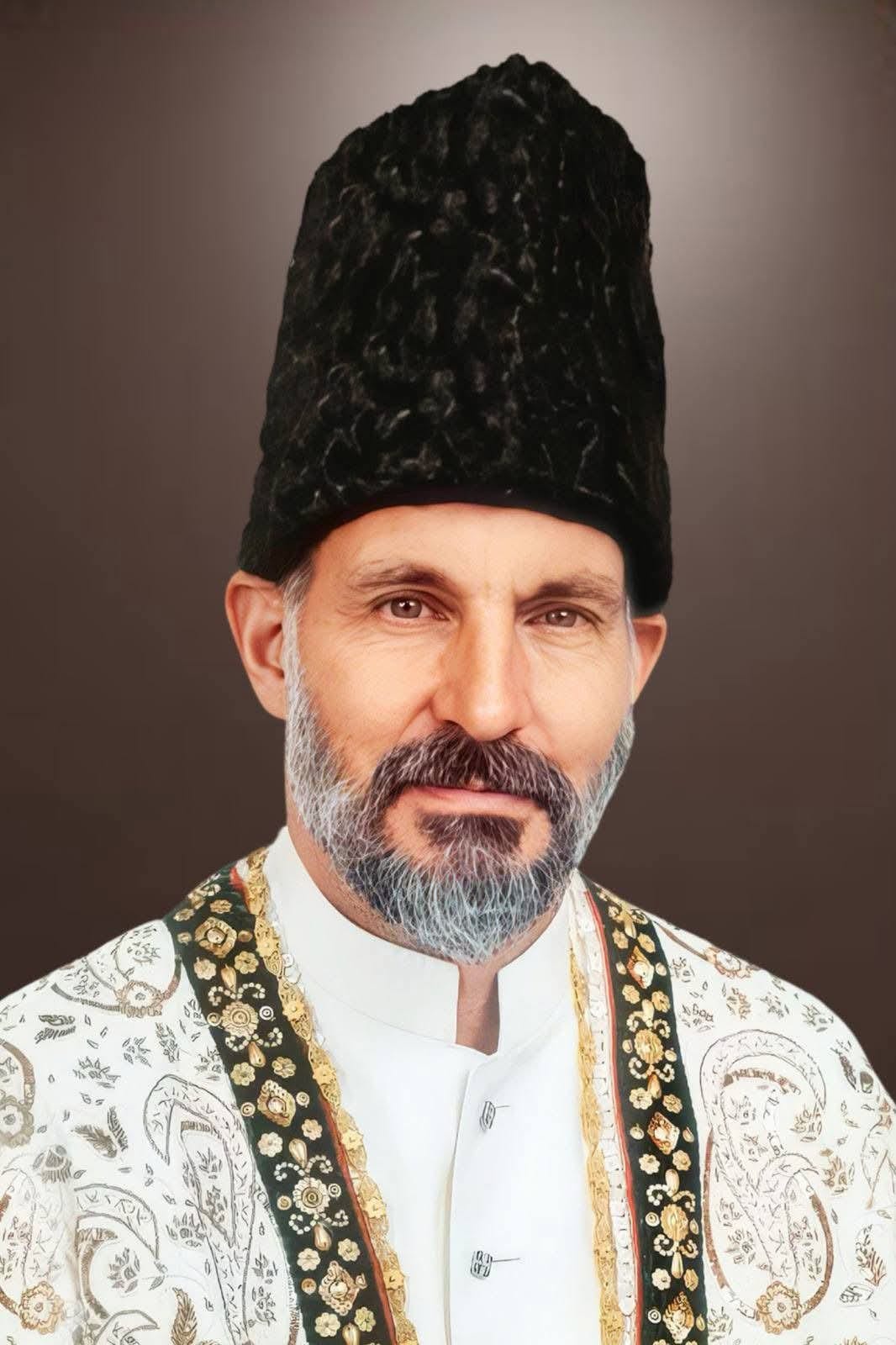
“Whether you are giving to an Imamat institution or to any other organization which works for good, these are the same in my eyes. All giving is an act of faith. All giving is of spiritual benefit.”
— Imām Shāh Raḥīm al-Ḥusaynī⁽ᶜ⁾
(Dallas, Texas, November 10, 2025)
IN CASE YOU MISSED IT

Translator’s Notes (S. J. Badakhchani)
Tusi elaborated on the concepts of tawalla (solidarity) and tabarra (disassociation) in another treatise (Tawalla wa Tabarra), where he discusses how a strong sense of solidarity with ‘Ali and the Imams, together with disassociation from all base instincts, can enable one to arrive at the state of gnosis (ma‘rifat). (Paradise of Submission, p. 255, note 66.)
Similar traditions of the early Shi‘i Imams are found in al-Kulayni, al-Kafi, vol. 1, p. 387. (Paradise of Submission, pp. 259–260, note 123.)
Attributed to Imam ‘Ali, in al-Kulayni, al-Kafi, vol. 2, pp. 333 ff., and al-Majlisi, Bihar al-Anwar, vol. 2, pp. 183 ff. (Paradise of Submission, p. 260, note 125.)
From a sermon delivered by Imam ‘Ali after his election as caliph. Nahj al-Balagha (Beirut, 1967), sermon 16, p. 57; and al-Qadi al-Nu‘man, Sharh al-Akhbar, ed. M. H. Jalali (Qumm, 1414/1993), vol. 1, pp. 371, 482–483. (Paradise of Submission, p. 260, note 126.)
A tradition attributed to Imam Ja‘far al-Sadiq, referring to Mu‘awiya’s “devilish” ‘aql. al-Kulayni, al-Kafi, vol. 1, p. 16. (Paradise of Submission, p. 253, note 37.)
For similar expressions attributed to Imam Ja‘far al-Sadiq, see al-Kulayni, al-Kafi, vol. 3, pp. 2–9. (Paradise of Submission, p. 260, note 129.)
This article offers a profound reminder that the Imam is not simply a historical or institutional figure, but the living locus of divine guidance and meaning. It invites readers to deepen their understanding of spiritual authority beyond the literal. Thank you