


Imām Sulṭān Muḥammad Shāh⁽ᶜ⁾
on the True Miracle of
Ḥazrat ‘Alī⁽ᶜ⁾
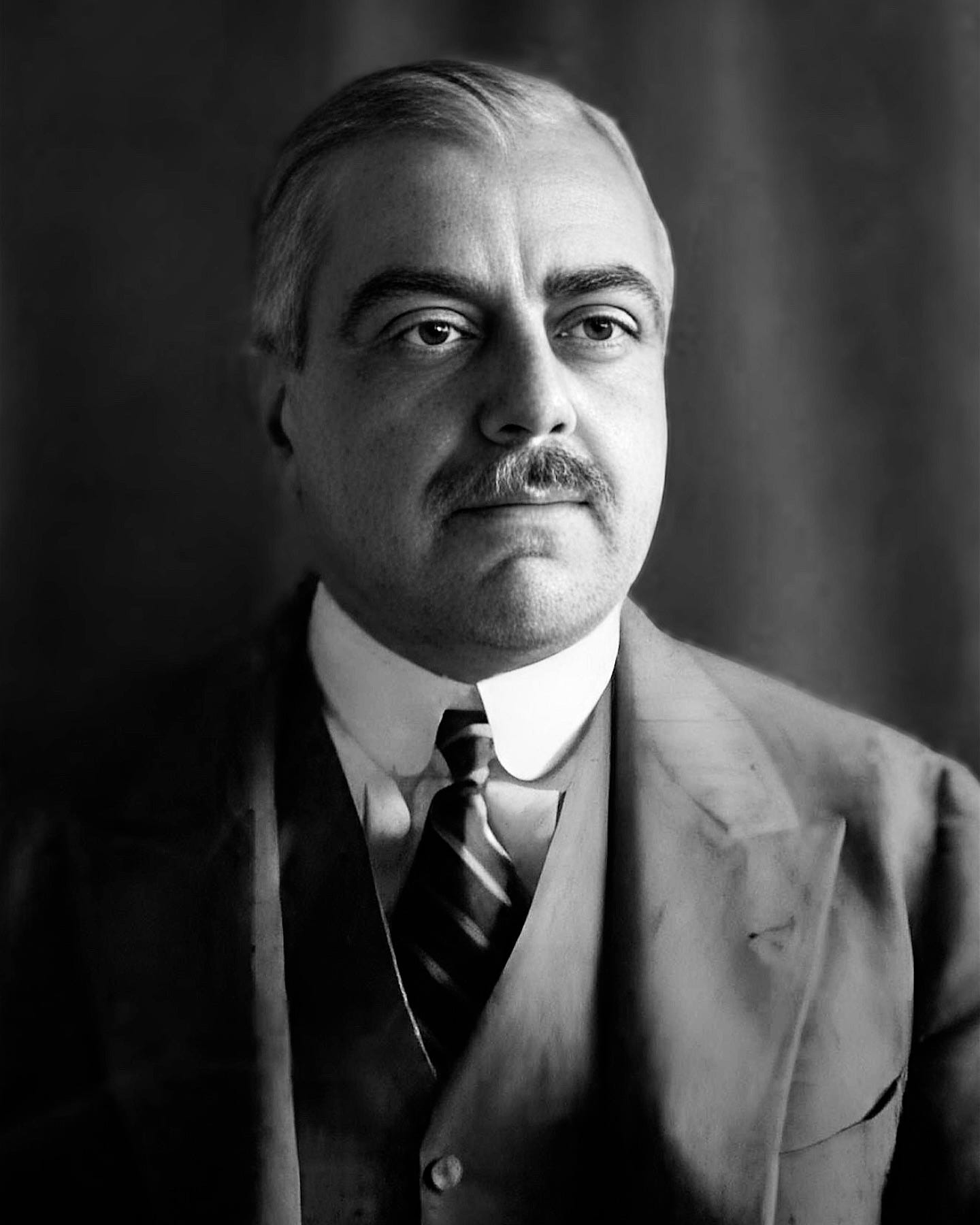
“Murtazā ‘Alī performed miracles (mu‘jiza), but miracles are things that human beings can learn, and even magicians (jāḍūgaro) are able to produce them. The true miracle
of Murtazā ‘Alī was that he caused a person to reach his own spiritual station (potānī jagyā) — the original abode of Truth (ḥaqīqat nā aṣal makān).”
— Mawlānā Sulṭān Muḥammad Shāh⁽ᶜ⁾
(Kalām-i Imām-i Mubīn, Farmān 160
Dar-es-Salaam, September 29, 1899)
True Miracles and Pseudo-Miracles
Excerpt from Naṣīr al-Dīn Ṭūsī, Rawda-yi Taslīm, translated by S.J. Badakhchani as Paradise of Submission: A Medieval Treatise on Ismaili Thought, 115-117.
Let us now discuss the miracle (muʿjizāt). Common people have said a lot of things concerning the miracles of Prophets, most of which is related [to the realm of] the supernatural (kharq-i ʿādāt, lit. ‘the breaking of habits’). When someone wants to have rational proofs for their existence, they say that thinking about them is wrong, and that it is useless to try to find the meaning and reality of them.
What the adepts of truth (ahl-i ḥaqq) say regarding the significance of miracles is that since the Prophets — may the peace of God be upon all of them — act as the intermediary link (wasīṭa) between the Divine Command (amr) and creation (khalq), due to that position (maṭḥabat) each [Prophet] manifests a trace of the Divine Light (anwār-i rubūbiyyat) according to his innate aptitude and capacity. Thus, it is nothing extraordinary if they [i.e. the Prophets] are graced by the emanation of divine matter (mawadd-i ilāhī) and assisted by spiritual forces (rūḥānīyāt) in order to govern the affairs of the physical realm.
Thus, each one of them is specially vouchsafed miracles or marvels as has been narrated regarding the miracles of each Prophet. However, they [i.e., the adepts of truth, ahl-i ḥaqq] add [that] one should not rest with only this outer appearance (ẓāhir) but should seek out the spiritual realities (ḥaqāʾiq) of each [miracle], for appearances correspond to flesh and realities to the spirit.
Concerning miracles and the thaumaturgic powers (karāmāt) of the Prophets, they [the adepts of truth] also state that, from the point of view of the domain of genus (ḥayyiz-i jins), the Prophets share with other men — in accordance with “I am a man like you” (Qur’ān 41:6) — everything that belongs to the physical creation and bodily composition, appearance and form, food, drink, apparel and marriage. However, from the point of view of the domain of differentia (ḥayyiz-i faṣl) — in accordance with “Nor does he speak of his own desire; it is just a revelation sent down to him” (Qur’ān 53:3–4) — the Prophets differ from others.
The true miracle is the miracle of knowledge and rational proof (ʿIlm wa Ḥujja), not the one of action and power. When someone dominates the whole world through power [and brute force], it is possible for a wolf or a lion to overpower him, yet one cannot say that the wolf or lion is superior to him. But in so far as knowledge is concerned, it is possible for someone to furnish an intellectual proof whereby the lips of all rational people in the world are sealed, being rendered incapable of defeating him through argument, unable to utter a single word by way of rebuttal.
In this world, there are both miracles and pseudo-miracles (shibh-i muʿjiz), that is to say, sorcery and talismans. Both [miracles and pseudo-miracles] look alike in the realm of similitudes, yet it is improper to confound the two. One must clearly distinguish between them and the distinction must be made by means of knowledge and intellectual proof, rather than by power and brute force….
[…] Undoubtedly, one has to accept that [the sort of prophetic] miracles [discussed here] are a kind of ability or power of which others are incapable. But as long as one does not comprehend the furthest limit of humankind’s powers and abilities, how can one know what powers and forces exceed it? Therefore, if someone seeks to know a Prophet through the miracles he performs, he should first truly ascertain the limits of each human individual’s abilities and powers, and apprehend what constitutes pseudo-miracles, such as sorcery, talismans and similar things.
Once his knowledge encompasses this, he will be able to apprehend which force and power is superhuman, and which can thus be understood to be a miracle. And it is obvious that this [understanding] is beyond the power of any man, and if it be within someone’s power, what need would he have for a Prophet?
Thus, it is only a Prophet who can distinguish [the real] miracle from the pseudo-miracle, and that person who demands a miracle from a person who makes a claim to prophethood is setting up his own reason (ʿaql) as the measure, thus weighing himself against the divinity of God and the prophethood of the Prophet. Hence, when he comes to have faith in the Prophet through a miracle, he is putting his faith in his own intellect and not him.
Miracles and Symbolic Exegesis
Excerpt from Khalil Andani, “Evolving Creation: An Ismaili Muslim Interpretation of Evolution”, Zygon Journal of Religion & Science: New Frontiers in Islam and Evolution (vol. 52, issue 2).
According to [the Ismaili dā‘ī] al-Sijistānī and Ismaili philosophers in general (Poonawala 1988, 211), Quranic verses about divine actions involving natural phenomena (sun, moon, stars, water, heaven, earth, earthquakes, horses, and so on) and the miracles of prior Prophets cannot be taken literally if their outward meaning contradicts what the intellect knows about the natural world and its laws. Al-Sijistānī maintains that all prophetic miracle stories are symbolic and would be rejected by truly intelligent people (al-Sijistānī 2011, 204). He also maintains that God performing miracles would falsify the divine wisdom (al-ḥikma) that He has established throughout His creation and that this in turn leads to the denial of God as the creator (al-Sijistānī 2011, 207).
In other words, the Ismailis see the regularities of the Cosmos as the manifestation of divine wisdom that cannot be altered. Accordingly, Ismaili exegetes interpret miracle accounts in the prophetic stories through spiritual symbolic exegesis: the great flood was a flood of knowledge and Noah’s Ark symbolizes Shem, the Imam appointed by Noah to guide his community to truth; Abraham’s sacrifice of his son Ishmael was Abraham’s designation of his son as the next Imam; Moses seeing a fire was his perception of the light of divine inspiration within his soul; Jesus birth without a father was his “spiritual birth” or religious initiation and not his physical birth; his creation of birds from clay means his spiritual training of novice disciples to make them into learned missionaries (al-Nu‘mān 1960, 78, 124–25, 192, 300, 303).
Wisdom-Filled Signs and Miracles
Excerpt from ‘Allāmah Naṣīr al-Dīn Naṣir Hunzai,“Investigation of Muʿjizāt (Miracles)” in Mifāt al-Ḥikmat, trans. Faquir Muhammad Hunzai and Rashida Noormohamed-Hunzai as A Key to Wisdom, 26.
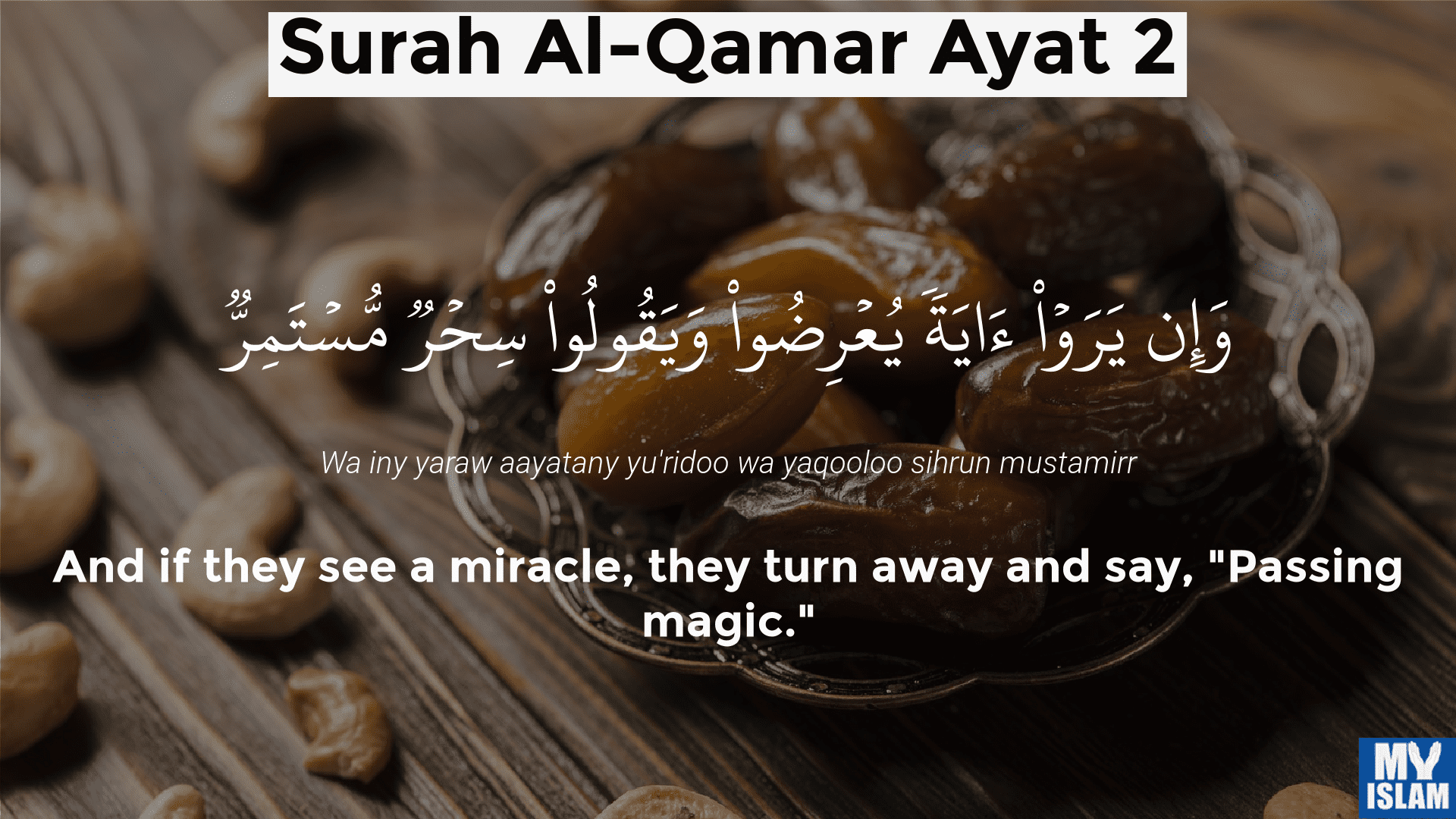
“The hour (resurrection) has come near and the moon is rent asunder (spiritually). If they see a sign (āyat, miracle) they turn away, and say: ‘(This is the same) magic continuing’, and belie (it) and follow their own vain desires; while every affair has an appointed time. Verily there have come to them tidings deterring them (from evil), (containing) consummate wisdom (ḥikmatun bāligha); yet warnings were of no avail. So (O Muḥammad) withdraw from them.”
One of the purports of the above-mentioned verses is that the miracles which were demanded of the Prophet of the Last Time will happen in different forms of the Resurrection, because one prominent distinction between the previous Prophets and the Holy Prophet is that he, as the Seal of the Prophets, is the Prophet of the cycle of Resurrection. Therefore, the intellectual miracles of the Awliyāʾ of the entire cycle and the last miracles of the great cosmic Resurrection, are all his miracles.
Another clear purport of these verses is that the sensory miracles which needed to be shown externally, have already been shown in appropriate times of the cosmic cycle. The news of these miracles have been conveyed to those who came later and their taʾwīl [esoteric interpretation] as a whole can be found in the consummate wisdom (ḥikmat-i bāligha). Another name of this consummate wisdom is “abundant good” (khayr kathīr), as the Qur’ān says:
“He gives wisdom (ḥikmat) to whom He wills. And he who is given wisdom is indeed given abundant good (khayr kathīr). But none remembers except men of intellect.”
By reflecting upon these two verses in the light of intellect and wisdom, we come to know the comprehensive point that, just as the place of miracle is at the apex of the sensory wonders, the place of wisdom is at the apex of intellectual wonders. Then, at the conjunction of the sensory and intellectual height, they (miracle and wisdom) are as connected to one another as the human body and soul. That is, the external act of wisdom is called miracle and the internal (esoteric) knowledge of miracle is called wisdom, and the name in which their complete and real implications are found together, is called āyat, the plural of which is āyāt, as mentioned in the Qur’ān:
“Verily We gave to Mūsā nine clear miracles (āyāt), so ask the children of Israel when he [Mūsā] came to them, and Pharaoh said to him: ‘Verily, I think that you, O Mūsā, are bewitched.”
From the Qur’ānic verse it is clear that what is called miracles (muʿjizāt) in general terms, are called āyāt in special terms. The wonders or miracles which Mūsā had shown to the Pharaoh and his people to frighten them were: rod, drought, deluge, locusts, white hand, lice, blood, frogs, and dearth of fruits. These sensory trials were called āyāt, i.e., miracles, not only because they had appeared extraordinarily, but also because taʾwīl, i.e., wisdom, was hidden in their appearance, and which is still there [for ta’wīl of these nine miracles, click here].
Thus, it is true to say that a collection of Qur’ānic words is also called an āyat, but not only because it is a collection of letters and words, but also for the reason that it is the speech of God in which lies wisdom (ḥikmat).
To continue reading, download the article:

Or read online by clicking here.
Imām Sulṭān Muḥammad Shāh⁽ᶜ⁾
on Strengthening the Soul
and Performing Miracles
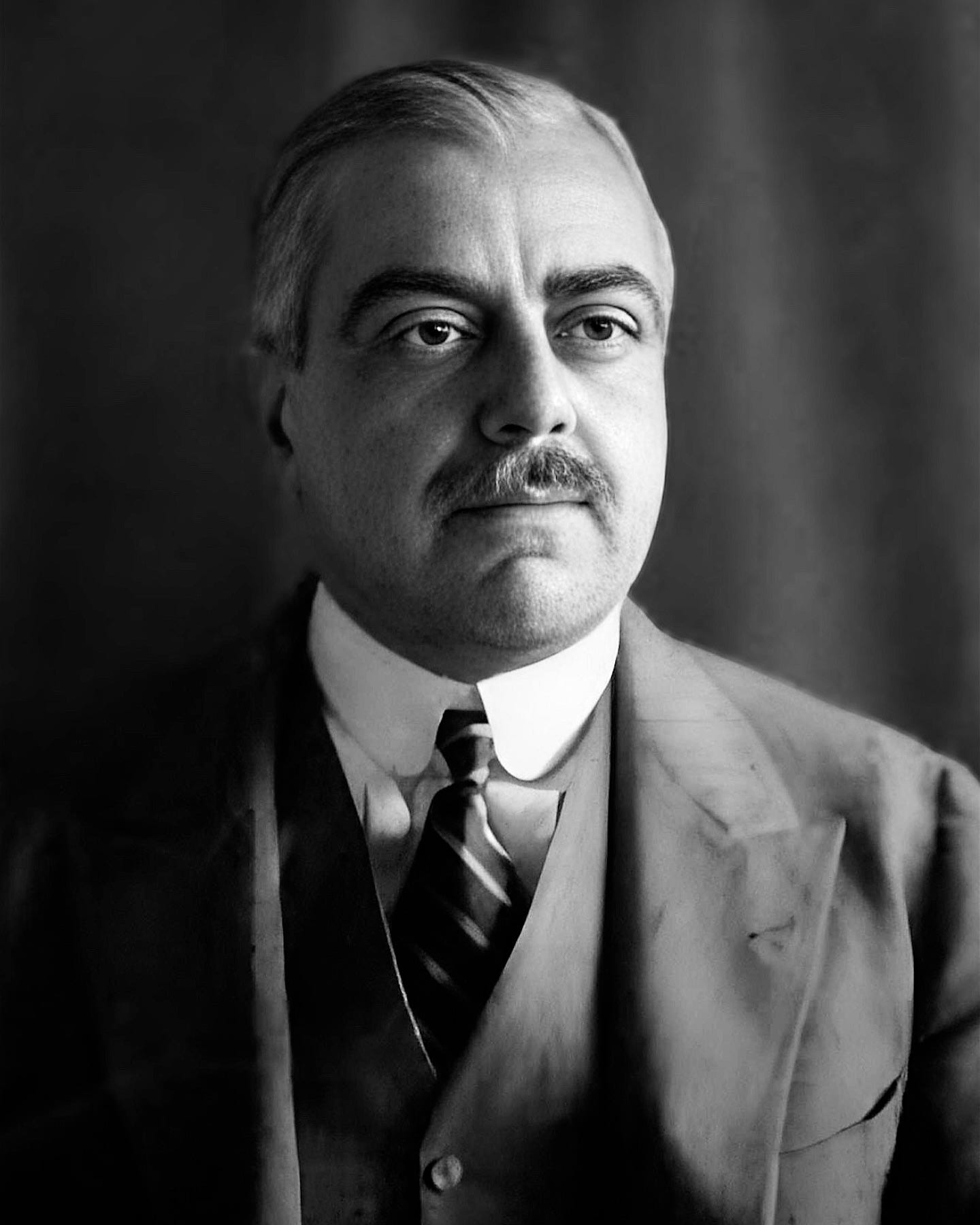
Train your soul so that it always performs good and virtuous deeds. When your soul becomes accustomed to righteous actions, it will become like a strong champion, and it will become like an angel — indeed, it will reach a state even higher than the angels. Then you yourself will be able to perform miracles. We offer prayers for you. Strengthen your soul through steady spiritual discipline so that it becomes capable of performing miracles, and so that you may come to recognize your true essence (asal jāt).”
— Mawlānā Sulṭān Muḥammad Shāh⁽ᶜ⁾
Kalām-i Imām-i Mubīn, Farmān 125,
Nairobi, October 6, 1905.
Ya ‘Ali Madad,
Khayāl ‘Aly
December 9, 2025
Follow on Instagram:
khayal.aly | ismaili.poetry
ismailignosis | ismailignosis.blog
Support Ismaili Gnosis in Publishing New Articles
“Whether you are giving to an Imamat institution or to any other organization which works for good, these are the same in my eyes. All giving is an act of faith. All giving is of spiritual benefit.”
— Imām Shāh Raḥīm al-Ḥusaynī⁽ᶜ⁾
(Dallas, Texas, November 10, 2025)


Can we please not use AI-generated images of our imam. Apart from being an insult to human intellect, it’s quite disturbing.